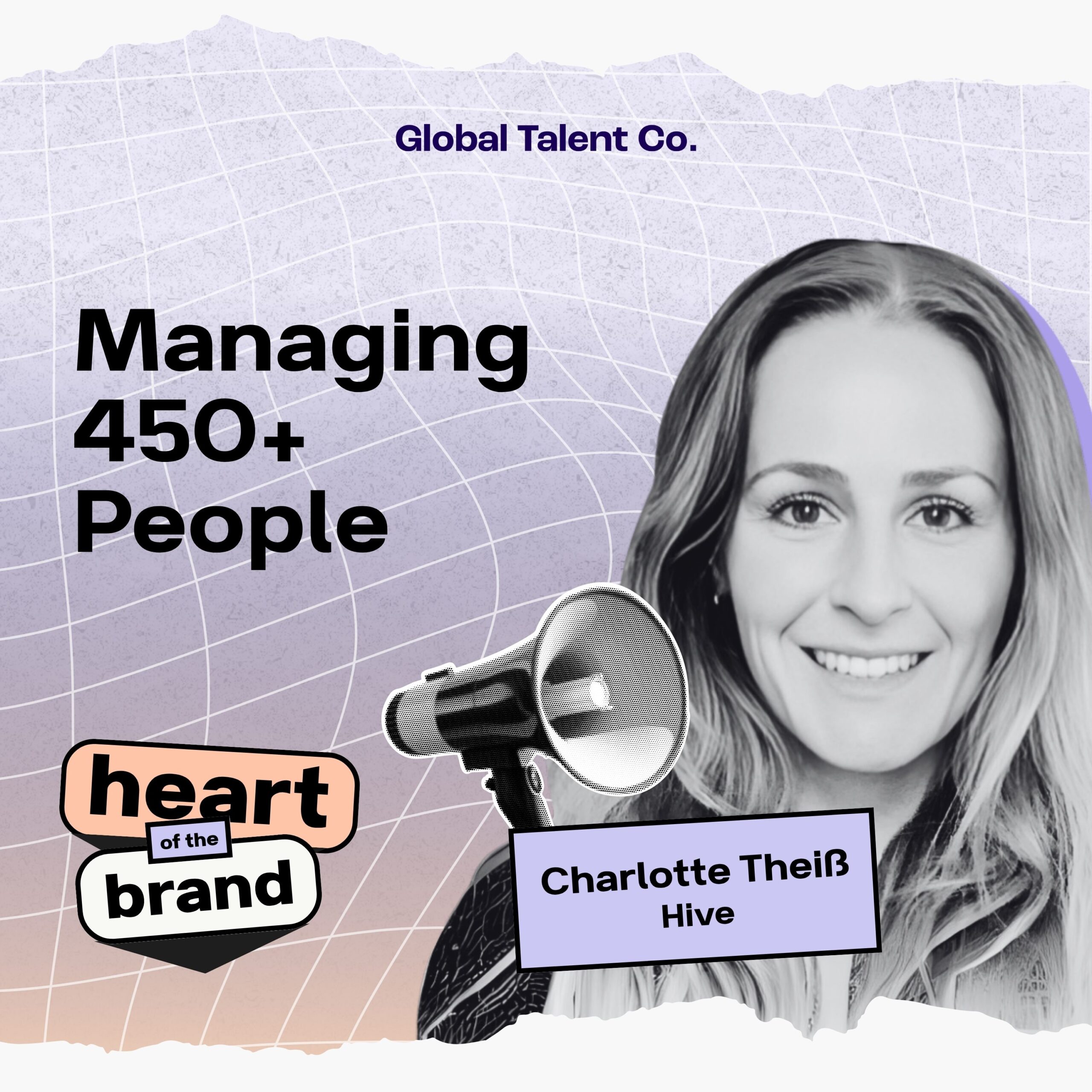
In this episode of Heart of the Brand, host Roman Kirsch interviews Valerie Mann, Chief People Officer at Elder. Elder is disrupting elderly care by connecting families with carers through their marketplace platform, and Valerie has developed a unique approach to building mission-driven culture without sacrificing performance. As Elder scaled their team while maintaining their social impact focus, Valerie created frameworks that balance empathy with accountability, turning mission alignment into a competitive advantage rather than a performance liability. Her approach includes embedding business context into every cultural touchpoint, developing “Swiss knife” hiring criteria for adaptable talent, and using performance metrics to validate cultural health rather than relying on abstract sentiment measures.
Topics Discussed
- Balancing mission-driven culture with performance accountability in social impact businesses
- Creating hiring frameworks that identify adaptable “Swiss knife” talent for scaling environments
- Embedding business context and metrics into cultural communication and decision-making
- Developing Employee Value Propositions (EVP) that define what keeps talent engaged beyond initial attraction
- Using performance data to measure cultural effectiveness rather than traditional sentiment surveys
- Building empathy-driven recruitment processes while maintaining high performance standards
- Integrating AI considerations into talent acquisition and skill development strategies
- Managing hybrid work arrangements with specific focus on collaboration and training challenges
Lessons For People Leaders
Anchor Mission to Business Performance, Not Abstract Values
Valerie embeds business context into every cultural communication by having leadership share weekly metrics at all-hands meetings while connecting each number to mission impact. When they report “10 more customers this week,” they immediately contextualize it as “10 more families being looked after and more carers with work.” This approach prevents mission-driven employees from viewing profitability as conflicting with purpose, creating alignment between performance and values that resulted in sustained team engagement during scaling.
Define Culture Through Problem-Solving Ability, Not Survey Scores
Rather than relying on traditional engagement surveys, Valerie measures culture through the team’s collective problem-solving effectiveness. She evaluates cultural health by observing how well teams collaborate to solve challenges when leadership isn’t present, especially during difficult periods. This approach treats culture as a performance enabler rather than a separate initiative, allowing leadership to identify cultural issues through declining performance patterns rather than waiting for survey feedback.
Hire for Adaptability Using “Swiss Knife” Criteria
Valerie developed hiring criteria focused on candidates who are both skilled generalists and eager to expand their capabilities. During recruitment, they specifically assess whether candidates want to become “Swiss knives” if they aren’t already, evaluating curiosity and willingness to learn across functions rather than just domain expertise. This approach proved essential when integrating new technologies like AI, where they prioritize the Swiss knife mindset over specific AI knowledge, enabling faster adaptation to changing business needs.
Build Employee Value Propositions Through Retention Research
Instead of focusing only on attraction factors, Valerie’s team researched what keeps existing employees engaged at Elder by asking “What keeps you at Elder?” rather than just “What attracted you to Elder?” This retention-focused EVP development revealed insights about thriving in the “messy middle” of scaling businesses, helping recruitment teams better screen for candidates who will succeed in their specific growth stage and cultural environment.
Use Performance Metrics to Validate Cultural Health
Valerie connects cultural effectiveness directly to business performance, treating persistent performance issues as indicators of cultural problems. When teams consistently struggle with problem-solving or collaboration, she investigates cultural factors rather than just operational issues. This approach allows leadership to address cultural challenges proactively through performance data rather than waiting for cultural symptoms to manifest in retention or engagement metrics.
Cross-Function HR Leaders to Build Business Acumen
Valerie regularly seconds her Head of Talent into other business functions like sales and customer support to build broader business understanding. This cross-functional exposure enables HR leaders to contribute more strategically to business decisions and better understand how people challenges impact overall company performance. The practice has improved HR’s ability to propose solutions that align with business needs
Embed Business Context in All Cultural Communications
Every cultural touchpoint includes specific business context that connects employee contributions to company success and mission impact. Valerie ensures that performance discussions, team meetings, and company communications consistently link individual work to business outcomes and social impact. This systematic approach prevents the disconnect between doing good work and doing profitable work that often challenges mission-driven organizations.